Trust Wallet: A Complete 1200-Word Fresh Overview
Trust Wallet is a well-known mobile application that allows individuals to manage and explore digital assets across multiple blockchain networks. It has become popular because of its simplicity, accessibility, and focus on user control. While the cryptocurrency world can sometimes feel technical or overwhelming, Trust Wallet aims to provide an environment where people can manage blockchain-based assets with confidence and clarity. This overview explains the wallet’s purpose, structure, design, features, and role within the broader Web3 landscape in a clean, educational, and neutral manner.
A User-Owned Digital Asset Wallet
At the core of Trust Wallet is the concept of user ownership. Unlike custodial platforms that hold assets on behalf of their users, Trust Wallet follows a non-custodial model. This means the user maintains control of their private keys, which are essential for accessing digital assets on blockchain networks. In simple terms, instead of trusting a company to keep the assets safe, the individual takes full responsibility.
This structure reflects a foundational principle of blockchain technology: decentralization. By giving users complete authority over their private keys, Trust Wallet removes the need for intermediaries. Everything operates directly between the user’s device and the blockchain.
Multi-Chain Support in One App
One of Trust Wallet’s strongest features is its ability to support a wide variety of blockchain networks. Instead of using a different wallet for each network, users can manage numerous digital assets from one place.
The app supports:
Popular blockchain networks such as Ethereum, BNB Smart Chain, Solana, Polygon, and more
Tokens built on different standards like ERC-20, BEP-20, and many others
Native coins from independent blockchains
Digital collectibles and NFTs
This flexibility makes Trust Wallet a central hub for exploring Web3 technology. Whether someone is interested in blockchain-based games, digital artwork, decentralized finance tools, or simply holding various currencies, Trust Wallet provides a unified and organized structure to manage them.
NFT Storage and Organization
NFTs have become a major part of blockchain culture, and Trust Wallet includes built-in support for them. Users can store, view, and organize their digital collectibles directly in the app, which serves as both a wallet and a gallery.
The NFT section is designed to display artwork, gaming items, and other collectibles visually. This allows people to keep track of their digital items without needing separate platforms. Multi-chain NFT support also means users can have items from different ecosystems stored together, making the experience more cohesive.
A Built-In Web3 Gateway
Beyond storing assets, Trust Wallet offers access to decentralized applications through its Web3 browser. This feature enables individuals to explore blockchain-based platforms directly on their mobile devices.
Some possible categories of decentralized applications include:
Blockchain-powered games
Tools for analyzing digital assets
NFT marketplaces
Platforms built for community governance
Social blockchain networks
The Web3 browser acts as the connection point between the user and decentralized platforms. Instead of requiring desktop extensions or special configurations, Trust Wallet integrates everything into a single interface, making it easier for people who are new to the ecosystem.
Approach to Security and User Protection
Although Trust Wallet gives users full control of their assets, it also includes features designed to promote safe usage. While the app does not store private information on external servers, it provides tools to enhance device-level protection.
Some of the security-supporting features include:
Local storage of private keys with strong encryption
Backup prompts to help users secure their recovery information
Optional biometric access controls
PIN or password lock options
Transaction reminders and verification screens
Educational warnings about unsafe activities
Trust Wallet emphasizes that key ownership comes with responsibility. It cannot reverse transactions or access recovery details because the user is the only one with access. This reinforces the idea that individuals must maintain careful control of their recovery information.
A Beginner-Friendly Interface
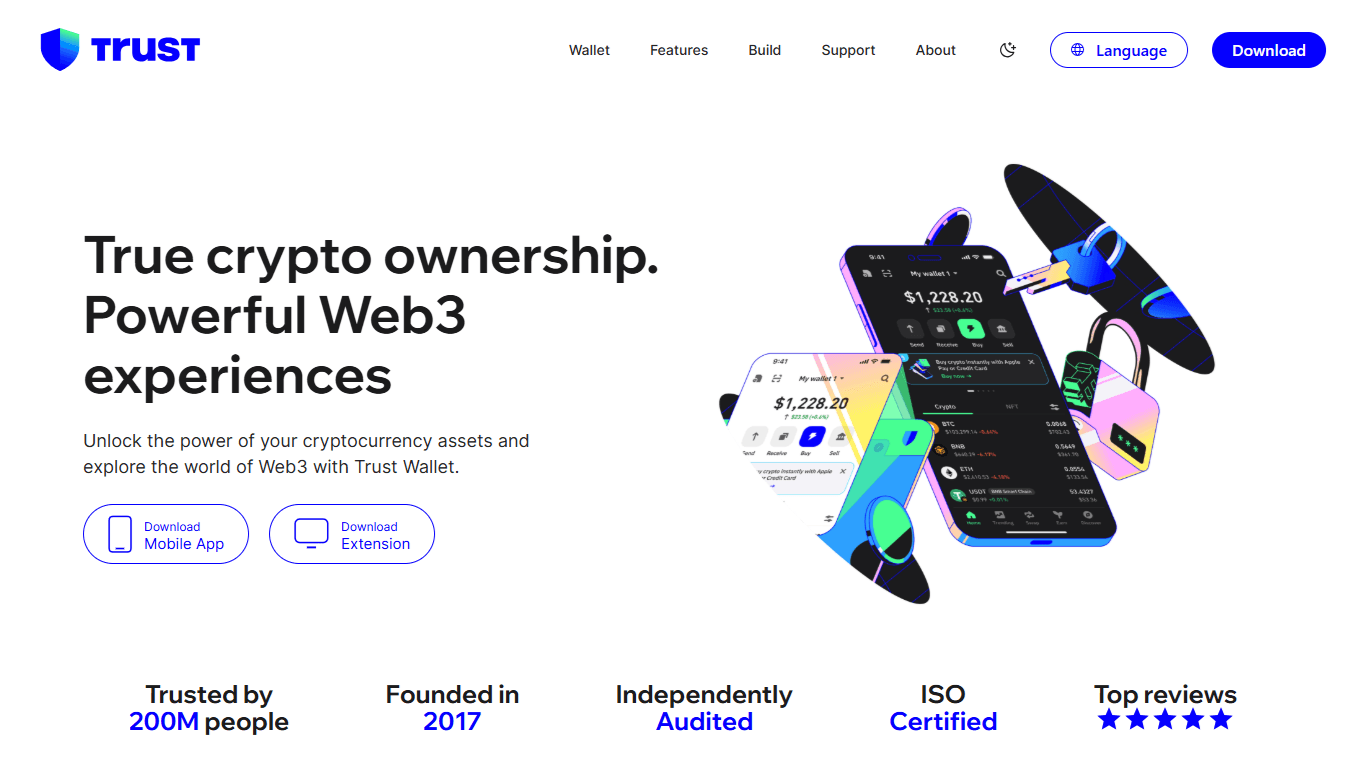
Trust Wallet’s interface is designed to be simple and welcoming. Every button, icon, and menu is arranged with clarity to make navigation easy for both beginners and experienced users.
The typical interface includes:
A dashboard showing digital asset balances
A dedicated tab for NFTs
A Web3 browser for decentralized apps
A transaction history section
Settings for security, preferences, and networks
By presenting information in an organized way, Trust Wallet reduces confusion and makes blockchain activity easier to understand. Users can monitor their assets, learn about blockchain operations, and explore various digital communities without needing advanced technical skills.
Staking Support for Participating in Networks
Some blockchain networks rely on community participation to maintain their systems. Trust Wallet includes a staking interface for networks that allow users to help support operations by participating in their validation mechanisms.
The app provides dashboards where individuals can see available options, validator information, and network details. This transparency helps users learn how different networks function and how decentralized participation works. Staking inside Trust Wallet is presented in an educational, optional manner that teaches people about how blockchain networks achieve security.
Learning Through Interaction
Trust Wallet acts as a practical learning tool for understanding blockchain fundamentals. Every action—whether organizing assets, viewing network fees, observing confirmations, or using decentralized apps—teaches important concepts about how blockchains operate.
Some things users naturally learn by using the app include:
How transactions move across decentralized networks
What confirmations mean in different blockchains
How digital signatures authorize activity
How assets differ across various ecosystems
How smart contracts interact with wallets
Because the wallet eliminates complex technical barriers, it allows people to develop blockchain literacy naturally. This makes Trust Wallet a stepping-stone for exploring wider Web3 technologies.
Designed for Mobile-First Experiences
Unlike desktop-based wallets, Trust Wallet was created specifically for mobile devices. This design choice supports portability and constant access, which aligns with how many people use their phones as their primary digital tools.
The mobile-first approach includes:
Lightweight performance across devices
Touch-based navigation
Smooth transitions between asset pages, collectibles, and Web3 tools
Simple switching between supported networks
This encourages more people to participate in blockchain communities without needing external equipment or complicated installations.
Community Influence and Development Roots
Trust Wallet has strong open-source roots. Many parts of its codebase have been shaped by community input, developer contributions, and feedback from blockchain users. This helps maintain transparency and build trust, as people can review parts of its structure and suggest improvements.
The wallet continues evolving as blockchain technology expands. New networks, updated features, and refinements are gradually added to match the direction of the Web3 landscape. This adaptability ensures that Trust Wallet remains aligned with user needs and emerging trends.
The Wallet’s Place in the Web3 Ecosystem
Trust Wallet plays a significant role in connecting individuals to Web3 experiences. As digital ownership, blockchain identity, decentralized finance, and NFT culture expand, wallets like Trust Wallet act as essential gateways into these new environments.
Its emphasis on user control, multi-chain support, and decentralized access makes it an important tool in a world moving toward more open and community-driven digital systems. Rather than being just a storage app, it becomes a bridge between traditional online tools and decentralized networks.
Conclusion
Trust Wallet is a fully mobile, non-custodial digital asset wallet designed to give individuals direct control over their blockchain-based items. With its easy interface, strong focus on user ownership, multi-chain support, NFT capabilities, and built-in Web3 browser, it serves as a complete gateway into the evolving world of decentralized technology.