Trust Wallet: A Fresh 1200-Word Comprehensive Overview
Trust Wallet has emerged as one of the most recognizable mobile applications for managing blockchain-based assets. It offers a simplified way for individuals to explore the world of digital ownership without requiring deep technical experience. Designed with accessibility, security, and multi-network compatibility at its core, Trust Wallet has become a major entry point into decentralized technology. This updated overview provides a fully fresh explanation of its purpose, design, features, and significance within the Web3 ecosystem.
A Wallet Built for User Control
At the heart of Trust Wallet is a philosophy centered around autonomy. Traditional online financial systems often rely on intermediaries who retain control over user accounts. Trust Wallet rejects this model by functioning as a non-custodial wallet. In this structure, the user—not a company—controls the private keys that authorize access to their digital assets.
This independence allows individuals to interact directly with blockchain networks. No external party can freeze, alter, or access those assets because the authority lies solely with the person holding the private key. This approach matches the foundation of blockchain technology, where decentralization and user empowerment are essential principles.
Built for Multi-Network Digital Asset Management
One of Trust Wallet’s defining characteristics is its broad compatibility with a diverse collection of blockchain networks. Rather than limiting users to a single system, the app enables management of assets from many chains in one place. This multi-chain architecture helps people navigate an increasingly interconnected blockchain ecosystem.
Supported categories can include:
Native assets from networks such as Ethereum, BNB Smart Chain, Solana, and many others
Token standards including ERC-20, BEP-20, and additional chain-specific formats
Cross-chain digital assets and emerging blockchain currencies
Collectibles and NFTs from supported ecosystems
Because blockchain networks operate differently, having one platform that communicates with many reduces friction for users who want a unified, organized experience.
Integration of Digital Collectibles and NFT Tools
Trust Wallet also supports blockchain-based collectibles, commonly referred to as NFTs. These can represent artwork, gaming items, memberships, digital identities, or any unique tokenized item. The built-in NFT viewer lets users organize and visually browse their collections directly from their mobile devices.
The inclusion of NFTs is important because digital ownership extends beyond currencies. Modern blockchain culture blends creativity, gaming, social experiences, and utility features. Trust Wallet’s support ensures individuals can interact with these assets in the same wallet they use for their tokens.
A Gateway for Exploring Decentralized Platforms
A major element of Trust Wallet is the integrated browser for decentralized applications. This Web3 browser connects users to applications built on blockchain networks, enabling interaction with smart contracts and decentralized digital environments.
Some types of decentralized applications people commonly access include:
Digital communities built on blockchain identity
NFT marketplaces
Creative platforms for digital artists
Tools for monitoring decentralized ecosystems
Blockchain-based games
Interactive Web3 social platforms
The Web3 browser is built into the app, making mobile interaction smooth and eliminating the need for additional installations or browser extensions. By offering this built-in gateway, Trust Wallet introduces users to the broader universe of decentralized technology.
Security Structure and Protective Design Principles
Even though Trust Wallet does not control user assets, it emphasizes security as a critical priority. The app is structured to keep private keys encrypted and stored only on the user’s device. This means no one outside the device has access to those keys.
Security-oriented features include:
Local storage of private keys with encryption
Backup reminders for safeguarding recovery information
Biometric and PIN-based access options
Transaction verification prompts
Security notices intended to promote safe habits
Optional device-level protection settings
While these features support safety, Trust Wallet maintains a clear stance that users must protect their recovery information and ensure their device security. Because the wallet is non-custodial, recovery methods cannot be retrieved if lost.
A Clean, Intuitive User Interface
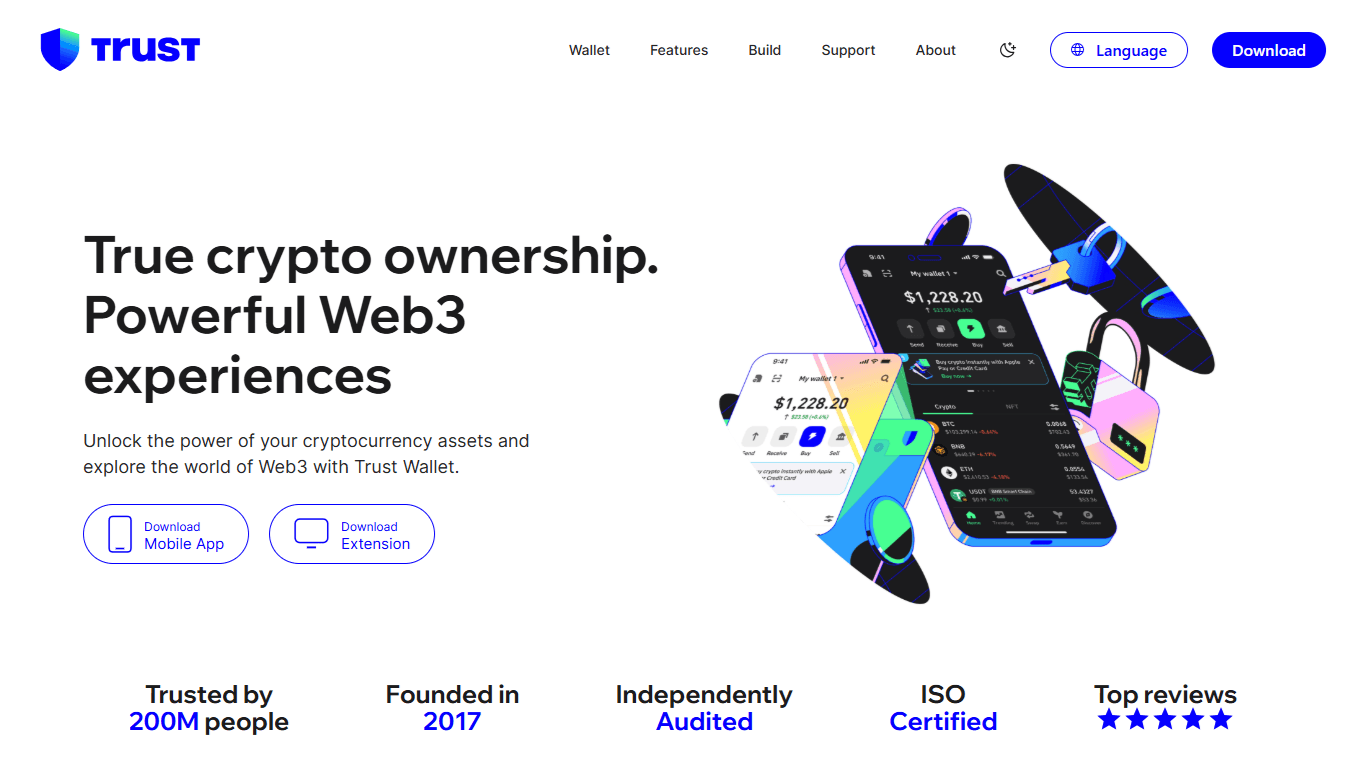
Trust Wallet is designed with simplicity in mind. One of its most appealing qualities is its clean interface, which helps reduce the complexity often associated with blockchain systems. The app uses clear labels, direct menus, and organized screens to make navigation easy.
Typical elements include:
A main dashboard showing asset values
A collectibles tab dedicated to NFTs
A browser section for decentralized platforms
Transaction records for transparency
Settings that control preferences, networks, and security
Each part of the interface is structured to guide users smoothly through features. Beginners benefit from the clarity, while experienced users appreciate the efficiency and speed.
Blockchain Participation Made Accessible
Many blockchain networks allow community participation through mechanisms that support the system’s operation. Trust Wallet provides tools that help users engage with networks that support staking or validation-based activity.
The app displays information such as:
Network details
Validator options
Staking status pages
Estimated returns or network conditions
General participation guidelines from the network
The goal is to help users understand how decentralized networks operate, making blockchain more approachable. Trust Wallet does not manage or control these networks, but it provides an interface that helps users explore them.
An Educational Gateway into Web3 Concepts
Trust Wallet acts as an educational bridge between traditional digital environments and decentralized technologies. Users naturally learn about blockchain concepts through experience, such as:
How distributed networks confirm transactions
The difference between various token standards
The relationship between wallets and smart contracts
How network fees work
How to navigate multi-chain environments
How digital signatures authorize actions
Because the interface is straightforward, individuals can explore and understand the mechanics of blockchain without needing extensive background knowledge. Many people develop their foundational understanding of Web3 by using Trust Wallet.
Mobile-First Design for a Modern Digital Lifestyle
Trust Wallet is specifically built for mobile devices, acknowledging that many people rely on smartphones as their primary digital tools. This mobile-first design enables on-the-go blockchain interaction and an optimized experience for touch navigation.
Advantages of mobile-first design include:
Fast, lightweight app performance
Easy access to digital assets at any time
Quick switching between networks and tools
A familiar interface similar to other mobile apps
Seamless integration of Web3 browsing and asset management
This approach makes it easier for a broad range of users to participate in decentralized technologies, regardless of technical background.
Evolution Through Community and Development
Trust Wallet’s direction has been influenced by open-source development and community involvement. Developers contribute to improvements, suggest updates, identify issues, and help shape the app’s structure. This style of community support aligns with the decentralized values reflected in blockchain systems.
As blockchain technology evolves—whether through new networks, creative applications, or innovative standards—Trust Wallet adapts. Its ongoing updates help ensure that users have access to a modern, relevant, and updated tool for digital asset management.
Its Role in Advancing Decentralized Technology
Trust Wallet is more than just a mobile application—it is a significant component in the wider Web3 ecosystem. As digital assets spread across industries like entertainment, social identity, finance, collectibles, and gaming, wallets serve as the interface that connects people to this growing digital world.
By prioritizing user control, multi-chain compatibility, and decentralized access, Trust Wallet supports the shift toward a more open digital future where individuals manage their own digital identities and assets.
Conclusion
Trust Wallet is a versatile, mobile-first, non-custodial digital asset wallet built around the principles of user control and decentralized access. With its multi-network support, NFT tools, built-in Web3 browser, clean interface, and security-focused design, it provides an accessible entry point for exploring the expanding world of blockchain technology.